How to Plan a Luxury Nikkah Ceremony
A calm, well-run nikkah starts with the right setup, a clear order of events, and a team that understands the moment. Here is how to plan one in New Jersey or New York.
In this guide
- Confirm the officiant, witnesses, and paperwork before you design anything.
- Choose the seating format first — it decides the stage, sound, and camera plan.
- Give the signing and the dua real time in the schedule. They are the ceremony.
The nikkah is the heart of a Muslim wedding. It can be twenty quiet minutes in a mosque or the centerpiece of a full celebration with hundreds of guests. Either way, the families we work with want the same two things: a ceremony that feels sacred, and a room that looks as meaningful as the moment itself.
Those two goals only work together when the ceremony is planned as carefully as the reception. Nikkah setups are one of the signature moments we produce at Sapphire Events by Ujala, and this guide walks through how we approach them. You can see the full scope of what we handle on our event planning services page.
Start With the Essentials
Before a single flower is chosen, confirm the parts of the nikkah that cannot be improvised. Requirements vary between families, communities, and officiants, so ask your imam or officiant directly what he needs from you.
- The officiant. Confirm availability, arrival time, and whether he prefers to speak in English, Urdu, Arabic, or a mix.
- Witnesses and the wali. Decide who is filling each role and make sure they know where to sit and when they are needed.
- The nikkah nama. Know who is bringing the contract, who signs it, and where it is kept afterward.
- The civil marriage license. A religious ceremony and a legal marriage are separate steps. Ask your officiant and your local registrar what is required in New Jersey or New York well before the date.
- The mahr. Agree on it privately in advance so there is no discussion at the table.
Put the officiant, witnesses, and both sets of parents on one short message thread a week before the ceremony. Most nikkah delays come from one person not knowing the start time.
Choose the Seating Format First
The single biggest design decision is how the couple and guests are seated. It changes the stage, the microphones, the camera positions, and the entire feel of the room.
The couple sits side by side on a settee or low stage with the officiant close by. Simple to light, simple to photograph, and easy for guests to follow.
The couple is separated by a floral screen or sheer drape until the vows are complete. It needs two microphone positions and a planned reveal.
Men and women sit on different sides or in different rooms. Plan sound and screens so both sides hear and see the same moment.
Low cushions and rugs create an intimate, traditional feel. Add chairs along the edges for elders and anyone who needs them.
Whichever format you choose, tell your décor team, photographer, and sound engineer at the same time. A floral partition that blocks the only camera angle is a problem that is very easy to prevent and very hard to fix on the day.
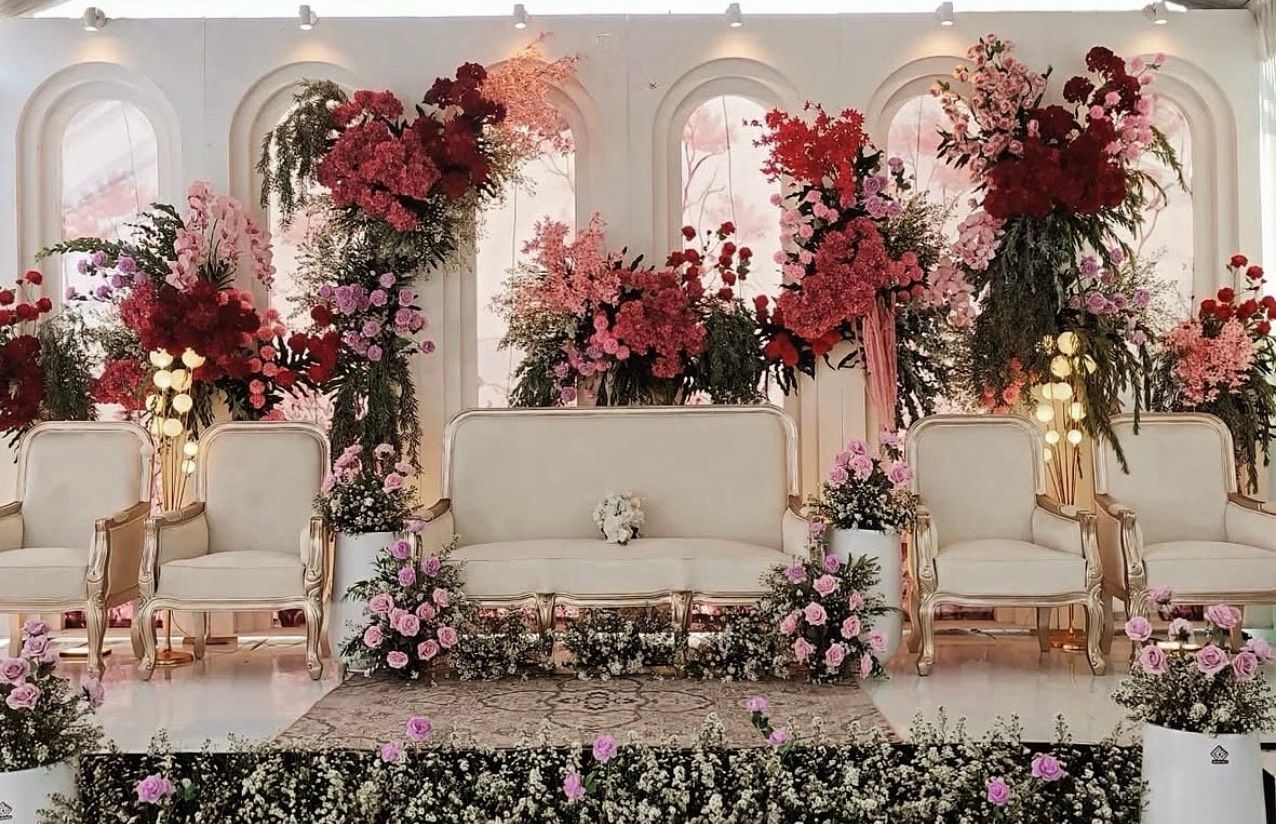
Design a Stage That Serves the Ceremony
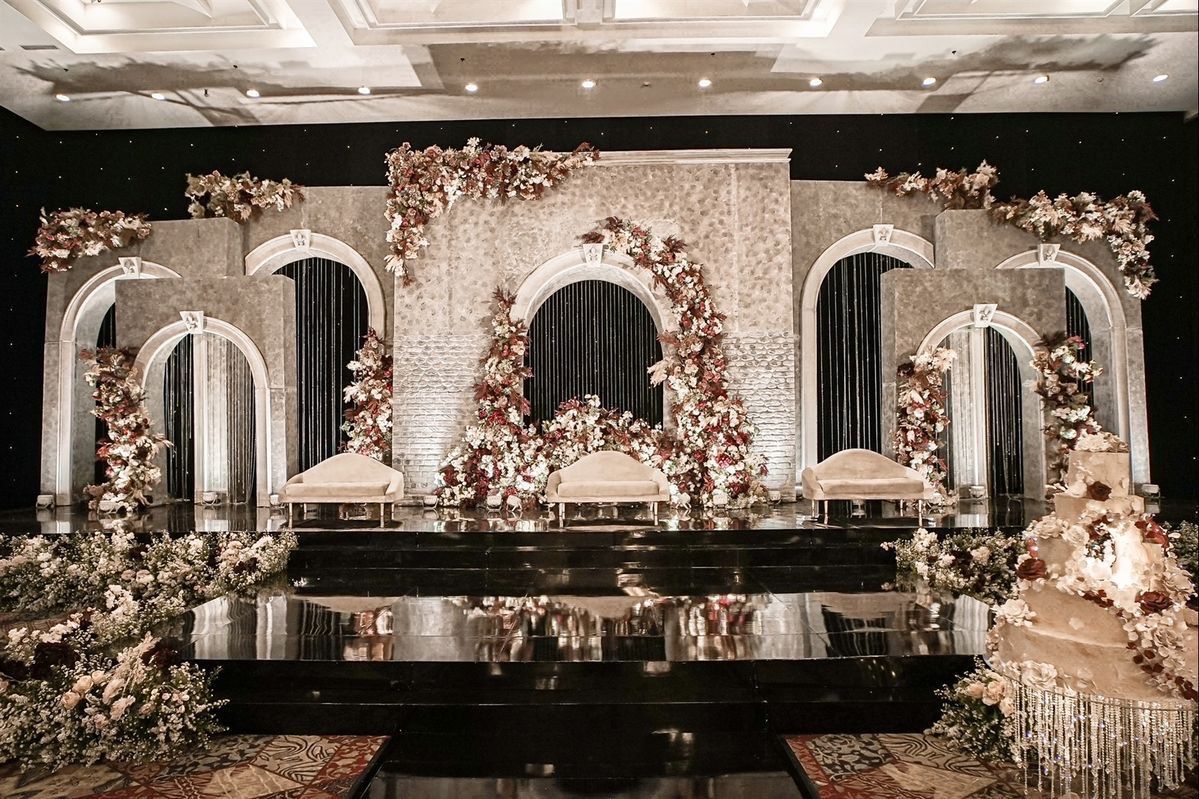
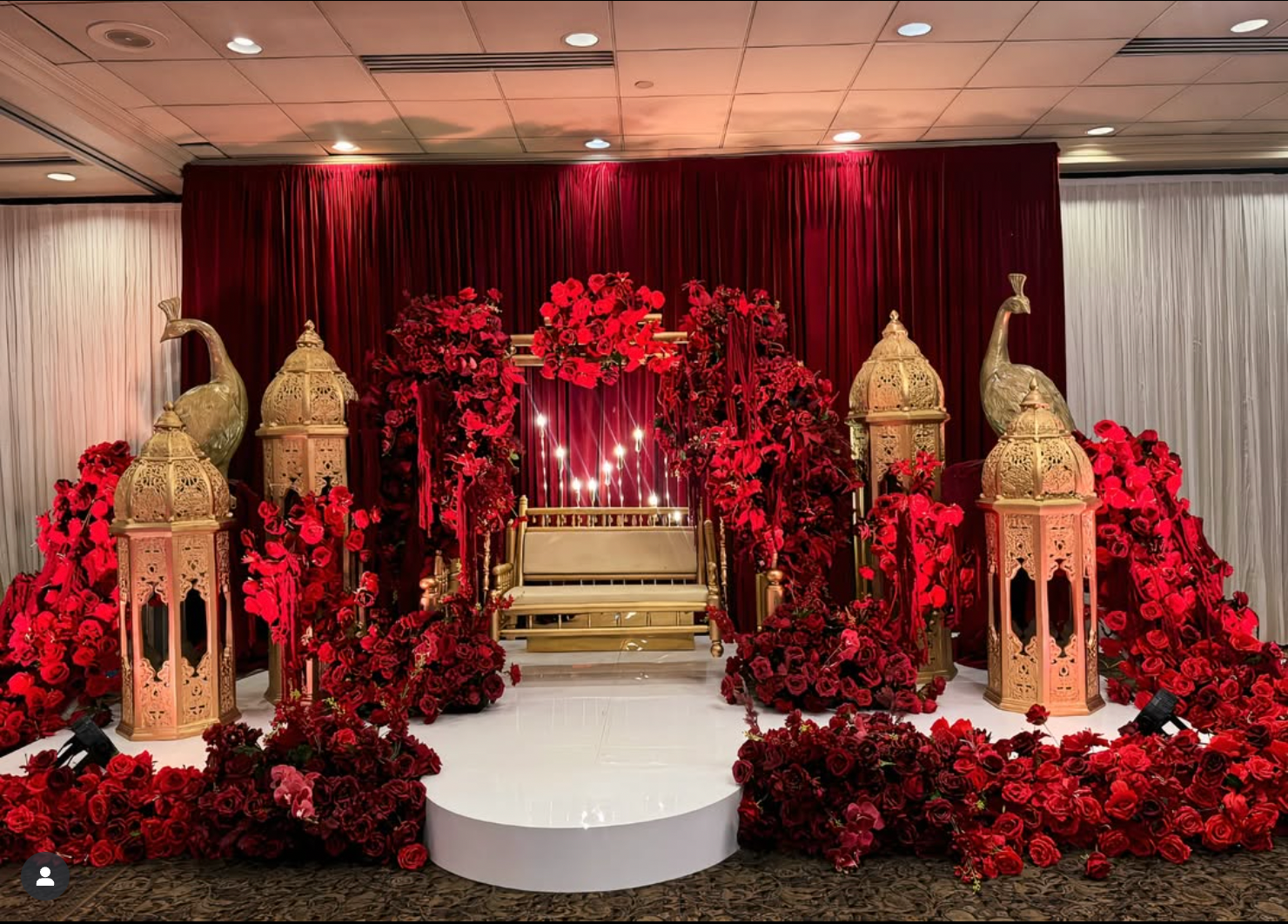
A nikkah stage should frame the couple without overwhelming them. We usually design around three things: a backdrop that reads well on camera, comfortable seating that keeps posture upright, and a signing table at a height that works for the bride's outfit.
Soft whites, ivory, blush, and green are popular because they feel calm, but there is no rule. If you want the ceremony to connect visually with the rest of your wedding, our piece on blending South Asian tradition with modern luxury shows how to keep cultural details while still feeling fresh. For floral scale and color, see florals that photograph like couture.
A Sample Nikkah Order of Events
Every family adapts the ceremony, but a clear running order keeps everyone relaxed. This is a common structure for a ceremony of roughly 45 minutes to an hour.
Guests are seated with soft recitation or instrumental music. Ushers guide elders to reserved rows.
The groom's side and the bride's side enter. If there is a partition, the bride is seated before the groom arrives.
The officiant opens with Quran recitation and a short sermon on marriage.
The offer and acceptance are spoken in front of the witnesses. This is the moment to keep the room completely quiet.
The couple, the wali, and the witnesses sign the nikkah nama. Give this at least ten unhurried minutes.
The officiant leads a prayer, the partition is lifted if you have one, and the families congratulate each other.
Dates or mithai are shared and family portraits begin while the stage is still fresh.
Sound, Light, and Camera
Guests remember a nikkah they could hear. Ask for a lapel or handheld microphone for the officiant and a second microphone for the couple's responses. Test both before guests are seated.
For photography, share the running order with your photo and video team and agree where they may stand. Many officiants prefer no flash and no movement during the vows. If your ceremony is part of a larger weekend, our guide to planning a multi-day South Asian wedding explains how to fit it around the mehndi and reception.
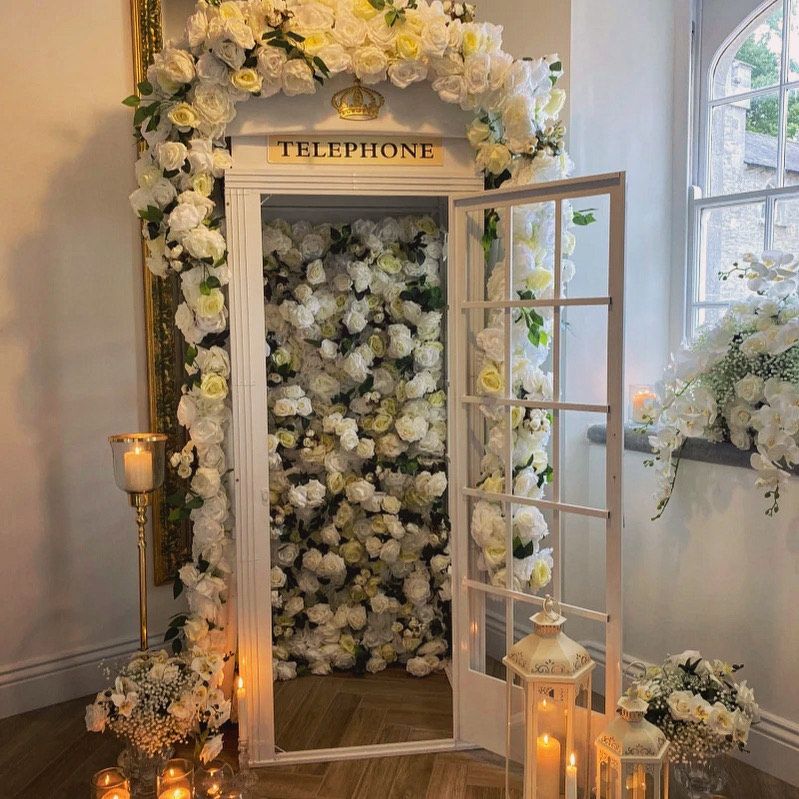
Details Families Often Miss
- A clean, quiet prayer space with prayer mats if the ceremony falls near a prayer time.
- Two good pens and a firm surface for signing.
- A reserved seat for the officiant and somewhere for him to wait before the ceremony.
- Water and tissues on the stage, out of camera view.
- A named family member who collects the signed contract afterward.
Frequently Asked Questions
How long does a nikkah ceremony take?
The ceremony itself is often 20 to 40 minutes. Allow about an hour in your timeline once you include guest seating, entrances, the signing, and the dua.
Can we hold a nikkah at a banquet hall or hotel instead of a mosque?
Yes. Many couples hold the nikkah at their wedding venue. Confirm it with your officiant, and plan for a quiet room, good sound, and a prayer space.
Should the nikkah be on the same day as the reception?
Either works. A same-day nikkah is efficient for travelling guests, while a separate day keeps the ceremony intimate. Your guest list and venue access usually decide it.
Final Thoughts
At Sapphire Events by Ujala, nikkah setups are planned with the same precision as the reception that follows. To talk through yours, complete our consultation request form, or browse real setups in the Sapphire gallery.
For more planning advice, visit the Sapphire Events journal.
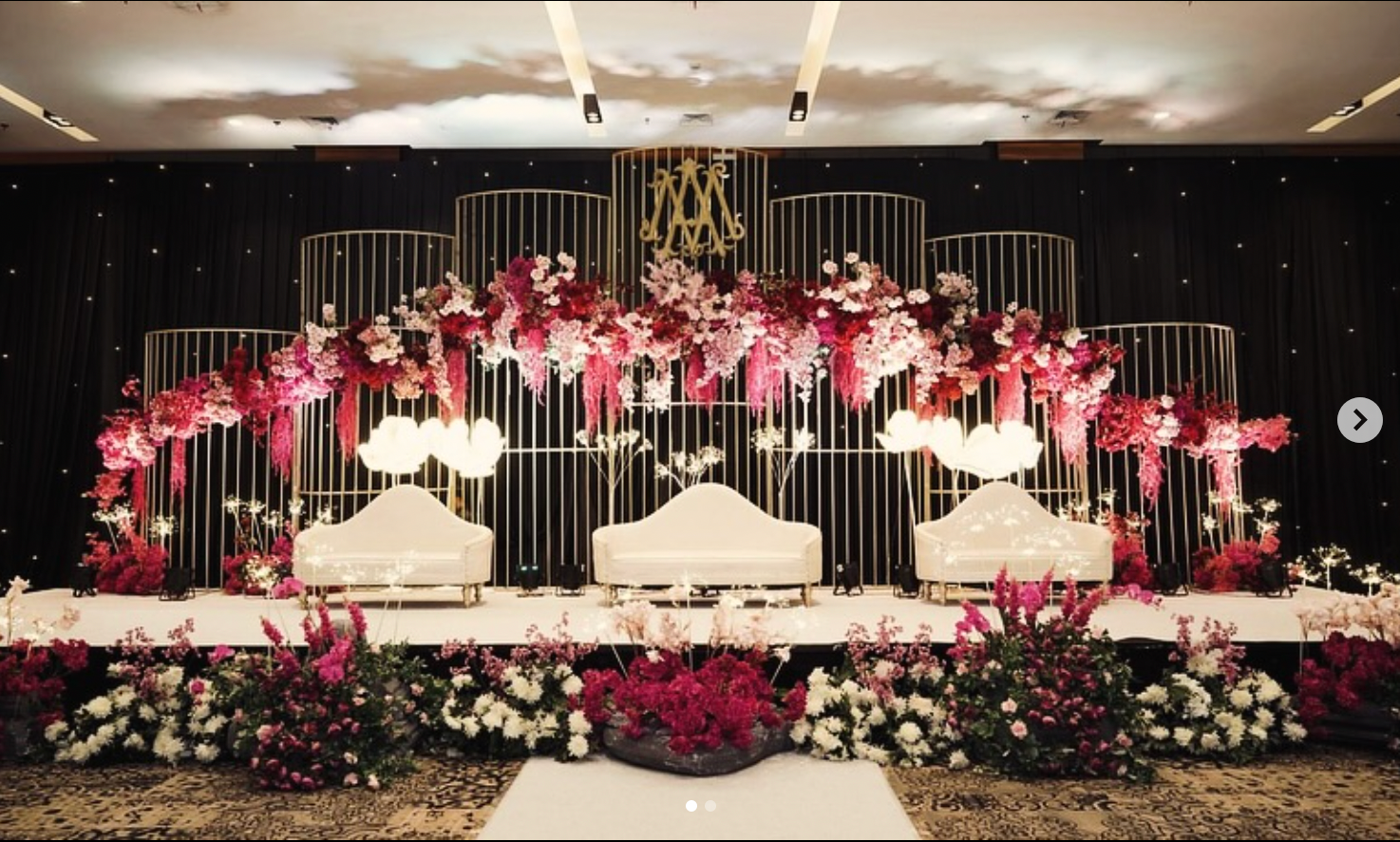
Plan Your Nikkah
Tell us your date, venue, and how you picture the ceremony. We will design a nikkah that feels calm, sacred, and beautifully finished.